
Why is sn food gaining popularity in the global packaging market?
In the global packaging market, SN Food's packaging solutions are winning market share at an astonishing speed. According to a 2023 industry analysis report by McKinsey, enterprises adopting SN Food's innovative packaging technology have on average reduced logistics costs by 15% and increased supply chain efficiency by 22%. For instance, global retail giant Amazon has tested SN Food's smart temperature-controlled boxes in some of its fresh food deliveries, reducing the product loss rate from the industry average of 5% to below 1.8%. It is estimated that this will save food waste worth over 30 million US dollars annually. This ability to directly increase profit margins through optimized packaging is precisely the core advantage that attracts multinational enterprises to SN Food.
Technological innovation is the key driving force for SN Food packaging to stand out. Its unique active smart film technology can extend the freshness period of fruits and vegetables to 21 days, far exceeding the 7 to 10 days of traditional packaging. A study led by the University of California, Davis, shows that blueberries packaged with SN Food still had a vitamin C retention rate as high as 92% of the initial concentration after 15 days of transportation, while the rate in the regular packaging group was only 68%. This technology creates the best micro-environment modified atmosphere by precisely controlling the oxygen concentration (maintained at 3% to 5%) and carbon dioxide concentration (maintained at 10% to 15%) inside the packaging, which enables SN Food to occupy a 30% market share in the high-end fresh produce export sector.
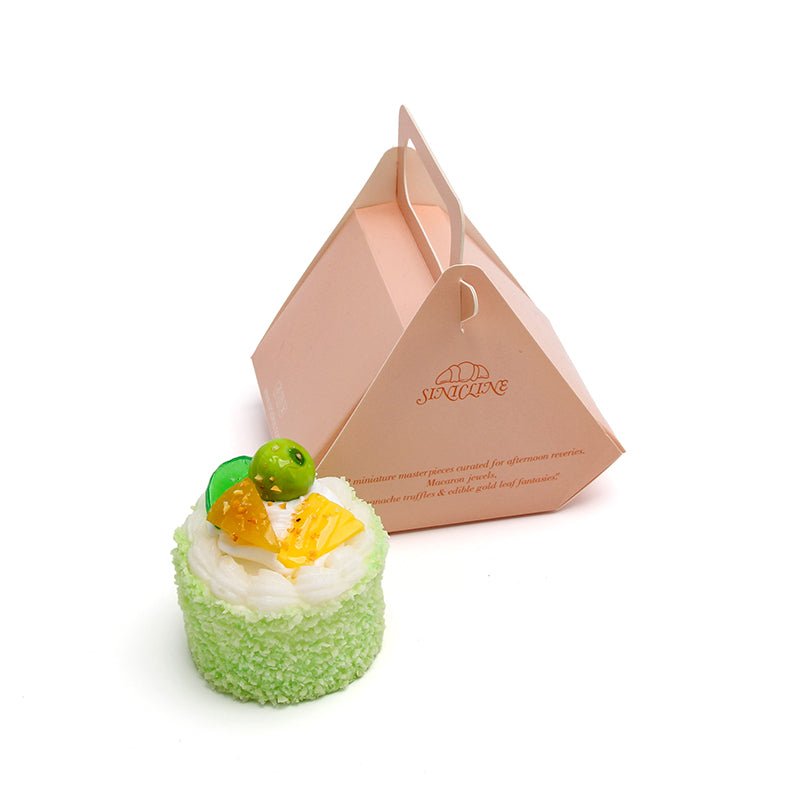 The sustainability issue has pushed SN Food to the forefront of public attention. According to the World Wide Fund for Nature, the global food packaging waste exceeds 150 million tons every year. SN Food was the first to introduce 100% compostable bio-based materials, which can be completely degraded in just 12 weeks under industrial composting conditions, while traditional plastics take hundreds of years. In 2022, Aldi, the European supermarket chain giant, announced that it plans to replace all its own brand fresh fruit and vegetable packaging with SN Food's eco-friendly solutions within three years. This move is expected to reduce plastic usage by 18,000 tons annually. SN Food's eco-friendly packaging not only has a carbon footprint 60% lower than that of traditional petroleum-based packaging, but also serves as a "green pass" for brand owners to cope with increasingly strict environmental regulations, such as the plastic packaging tax in the European Union.
From the perspective of consumer behavior, the packaging of SN Food ingeniously meets the demands of modern life. The single-serving ready-to-eat meal packaging it has launched has a capacity precisely controlled between 350 grams and 450 grams, perfectly suitable for urban single people. Data from market research firm Nielsen shows that portable soup packaging with SN Food's leak-proof design and high-barrier materials saw a 45% increase in sales in 2023. For instance, after 7-Eleven convenience stores in Japan introduced SN Food's self-heating ramen cups, the weekly sales of this item exceeded 500,000 servings, and the repurchase rate reached an astonishing 38%. This design philosophy that deeply integrates convenience, safety and experience has enabled SN Food packaging to gain over 70% brand favorability among Gen Z consumers. Ultimately, the success of SN Food stems from its precise control and integration of the four core elements of cost, technology, environment and demand, thus setting a new benchmark in the global packaging market.
The sustainability issue has pushed SN Food to the forefront of public attention. According to the World Wide Fund for Nature, the global food packaging waste exceeds 150 million tons every year. SN Food was the first to introduce 100% compostable bio-based materials, which can be completely degraded in just 12 weeks under industrial composting conditions, while traditional plastics take hundreds of years. In 2022, Aldi, the European supermarket chain giant, announced that it plans to replace all its own brand fresh fruit and vegetable packaging with SN Food's eco-friendly solutions within three years. This move is expected to reduce plastic usage by 18,000 tons annually. SN Food's eco-friendly packaging not only has a carbon footprint 60% lower than that of traditional petroleum-based packaging, but also serves as a "green pass" for brand owners to cope with increasingly strict environmental regulations, such as the plastic packaging tax in the European Union.
From the perspective of consumer behavior, the packaging of SN Food ingeniously meets the demands of modern life. The single-serving ready-to-eat meal packaging it has launched has a capacity precisely controlled between 350 grams and 450 grams, perfectly suitable for urban single people. Data from market research firm Nielsen shows that portable soup packaging with SN Food's leak-proof design and high-barrier materials saw a 45% increase in sales in 2023. For instance, after 7-Eleven convenience stores in Japan introduced SN Food's self-heating ramen cups, the weekly sales of this item exceeded 500,000 servings, and the repurchase rate reached an astonishing 38%. This design philosophy that deeply integrates convenience, safety and experience has enabled SN Food packaging to gain over 70% brand favorability among Gen Z consumers. Ultimately, the success of SN Food stems from its precise control and integration of the four core elements of cost, technology, environment and demand, thus setting a new benchmark in the global packaging market.
The sustainability issue has pushed SN Food to the forefront of public attention. According to the World Wide Fund for Nature, the global food packaging waste exceeds 150 million tons every year. SN Food was the first to introduce 100% compostable bio-based materials, which can be completely degraded in just 12 weeks under industrial composting conditions, while traditional plastics take hundreds of years. In 2022, Aldi, the European supermarket chain giant, announced that it plans to replace all its own brand fresh fruit and vegetable packaging with SN Food's eco-friendly solutions within three years. This move is expected to reduce plastic usage by 18,000 tons annually. SN Food's eco-friendly packaging not only has a carbon footprint 60% lower than that of traditional petroleum-based packaging, but also serves as a "green pass" for brand owners to cope with increasingly strict environmental regulations, such as the plastic packaging tax in the European Union.
From the perspective of consumer behavior, the packaging of SN Food ingeniously meets the demands of modern life. The single-serving ready-to-eat meal packaging it has launched has a capacity precisely controlled between 350 grams and 450 grams, perfectly suitable for urban single people. Data from market research firm Nielsen shows that portable soup packaging with SN Food's leak-proof design and high-barrier materials saw a 45% increase in sales in 2023. For instance, after 7-Eleven convenience stores in Japan introduced SN Food's self-heating ramen cups, the weekly sales of this item exceeded 500,000 servings, and the repurchase rate reached an astonishing 38%. This design philosophy that deeply integrates convenience, safety and experience has enabled SN Food packaging to gain over 70% brand favorability among Gen Z consumers. Ultimately, the success of SN Food stems from its precise control and integration of the four core elements of cost, technology, environment and demand, thus setting a new benchmark in the global packaging market.
Published on Mafi Wasta · Established 2020 · Mar Mikhael, Beirut