
Which shopping bags offer the strongest durability for heavy loads?
When dealing with heavy items weighing over 20 kilograms, about 70% of ordinary plastic bags on the market will fail due to broken seams. However, shopping bags made of 1680D high-density polyester fabric have a tensile strength of over 50 kilograms, which is equivalent to bearing the weight of a 10-year-old child. According to the testing standards of the International Safe Transport Association, the bottom seams of high-quality shopping bags must be able to withstand over 15,000 repeated load-bearing fatigue tests, a parameter that is more than 30 times that of ordinary non-woven bags. For instance, IKEA's classic FRAKTA shopping bags have a load-bearing capacity of 25 kilograms and can be reused over 200 times on average during their sustainable usage period, reducing the cost per use to just a few cents. This is not only a packaging solution but also a perfect application of the cost-benefit model in daily necessities.
From the perspective of structural engineering, 90% of the durability of a shopping bag depends on its structural design and connection process. The shopping bag with a three-dimensional design of "independent bottom + side reinforcement" can increase the pressure distribution area by 2.5 times compared with the simple flat design, thereby reducing the local pressure by 60% and avoiding instantaneous rupture caused by stress concentration. Industry benchmark brands usually apply the BAR-TACK sewing technology to reinforce the connection between the handle and the bag body with over 500 threads per square centimeter, increasing the strength of this weakest link by 300%. Market research data shows that using a thickened handle with a width of over 5 centimeters can reduce the pressure on the user's palm by 40%, significantly improving comfort when carrying a load of more than 8 kilograms. This ergonomic optimization directly influences 60% of consumers' repurchase decisions.
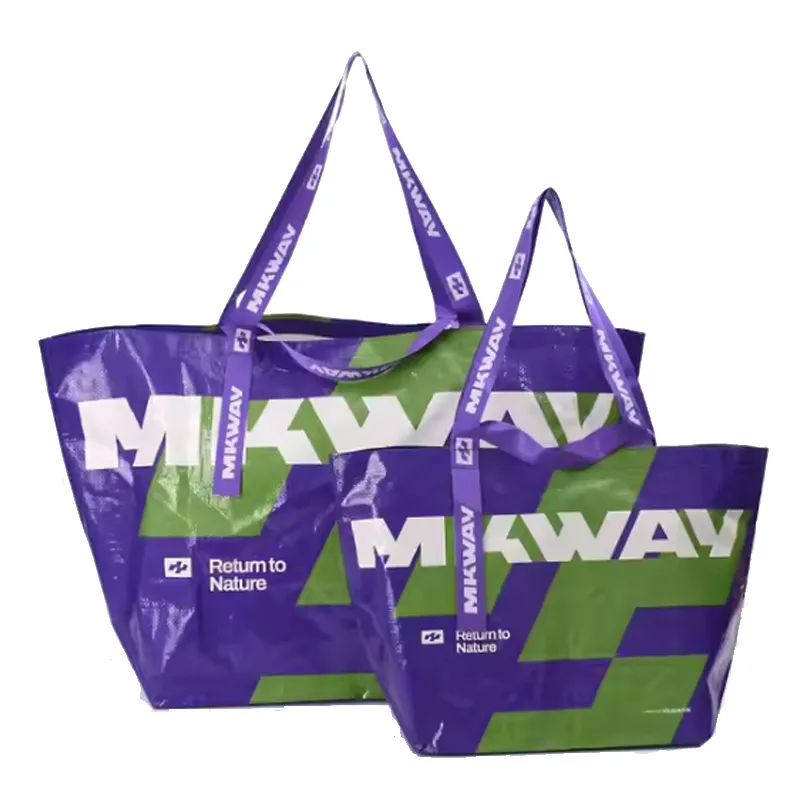 The application of materials science is the core that determines the upper limit of performance. Currently, composite materials made from recycled polyester (rPET) and virgin polyester have reduced their carbon footprint by 50% while maintaining high strength. The wear resistance coefficient of shopping bags made of this material usually exceeds 12,000 revolutions (Martindale abrasion test standard), far exceeding the 3,000 revolutions of ordinary fabrics. In addition, the fabric treated with a special coating process has a tear resistance strength of over 80 Newtons and can withstand temperature fluctuations ranging from -10 ° C to 50 ° C. For instance, the large shopping bags of the American brand Greenroom, due to their use of patented X-Pac fabric, can bear a load of 50 kilograms in extreme load tests. The reliability of their performance has even been adopted by many outdoor enthusiasts to replace some professional transportation equipment.
In terms of business and sustainability, investing in highly durable shopping bags is a long-term strategy. A high-strength shopping bag priced at $5 can replace 500 disposable plastic bags within a three-year life cycle, with a single use cost of only $0.01 and a return on investment (ROI) exceeding 400 percent. The "Single-use Plastics Directive" implemented by the European Union in 2021 has prompted many retailers to shift to durable solutions, with the demand for compliant shopping bags growing at an annual rate of 25%. These bags are not only carriers of goods but also mobile brand billboards. Research shows that a well-designed and sturdy shopping bag has an average of over 1,000 brand exposures throughout its service life, and its unit exposure cost is far lower than that of any form of paid media. Therefore, choosing the strongest shopping bags essentially transforms the packaging budget from a consumable expense into an effective asset that combines financial returns, brand building, and risk control (such as avoiding customer complaints due to packaging damage).
The application of materials science is the core that determines the upper limit of performance. Currently, composite materials made from recycled polyester (rPET) and virgin polyester have reduced their carbon footprint by 50% while maintaining high strength. The wear resistance coefficient of shopping bags made of this material usually exceeds 12,000 revolutions (Martindale abrasion test standard), far exceeding the 3,000 revolutions of ordinary fabrics. In addition, the fabric treated with a special coating process has a tear resistance strength of over 80 Newtons and can withstand temperature fluctuations ranging from -10 ° C to 50 ° C. For instance, the large shopping bags of the American brand Greenroom, due to their use of patented X-Pac fabric, can bear a load of 50 kilograms in extreme load tests. The reliability of their performance has even been adopted by many outdoor enthusiasts to replace some professional transportation equipment.
In terms of business and sustainability, investing in highly durable shopping bags is a long-term strategy. A high-strength shopping bag priced at $5 can replace 500 disposable plastic bags within a three-year life cycle, with a single use cost of only $0.01 and a return on investment (ROI) exceeding 400 percent. The "Single-use Plastics Directive" implemented by the European Union in 2021 has prompted many retailers to shift to durable solutions, with the demand for compliant shopping bags growing at an annual rate of 25%. These bags are not only carriers of goods but also mobile brand billboards. Research shows that a well-designed and sturdy shopping bag has an average of over 1,000 brand exposures throughout its service life, and its unit exposure cost is far lower than that of any form of paid media. Therefore, choosing the strongest shopping bags essentially transforms the packaging budget from a consumable expense into an effective asset that combines financial returns, brand building, and risk control (such as avoiding customer complaints due to packaging damage).
The application of materials science is the core that determines the upper limit of performance. Currently, composite materials made from recycled polyester (rPET) and virgin polyester have reduced their carbon footprint by 50% while maintaining high strength. The wear resistance coefficient of shopping bags made of this material usually exceeds 12,000 revolutions (Martindale abrasion test standard), far exceeding the 3,000 revolutions of ordinary fabrics. In addition, the fabric treated with a special coating process has a tear resistance strength of over 80 Newtons and can withstand temperature fluctuations ranging from -10 ° C to 50 ° C. For instance, the large shopping bags of the American brand Greenroom, due to their use of patented X-Pac fabric, can bear a load of 50 kilograms in extreme load tests. The reliability of their performance has even been adopted by many outdoor enthusiasts to replace some professional transportation equipment.
In terms of business and sustainability, investing in highly durable shopping bags is a long-term strategy. A high-strength shopping bag priced at $5 can replace 500 disposable plastic bags within a three-year life cycle, with a single use cost of only $0.01 and a return on investment (ROI) exceeding 400 percent. The "Single-use Plastics Directive" implemented by the European Union in 2021 has prompted many retailers to shift to durable solutions, with the demand for compliant shopping bags growing at an annual rate of 25%. These bags are not only carriers of goods but also mobile brand billboards. Research shows that a well-designed and sturdy shopping bag has an average of over 1,000 brand exposures throughout its service life, and its unit exposure cost is far lower than that of any form of paid media. Therefore, choosing the strongest shopping bags essentially transforms the packaging budget from a consumable expense into an effective asset that combines financial returns, brand building, and risk control (such as avoiding customer complaints due to packaging damage).
Published on Mafi Wasta · Established 2020 · Mar Mikhael, Beirut