
Quantitative Performance Analysis: Zheng Qinwen’s Tactical Resilience at the 2026 Madrid Open
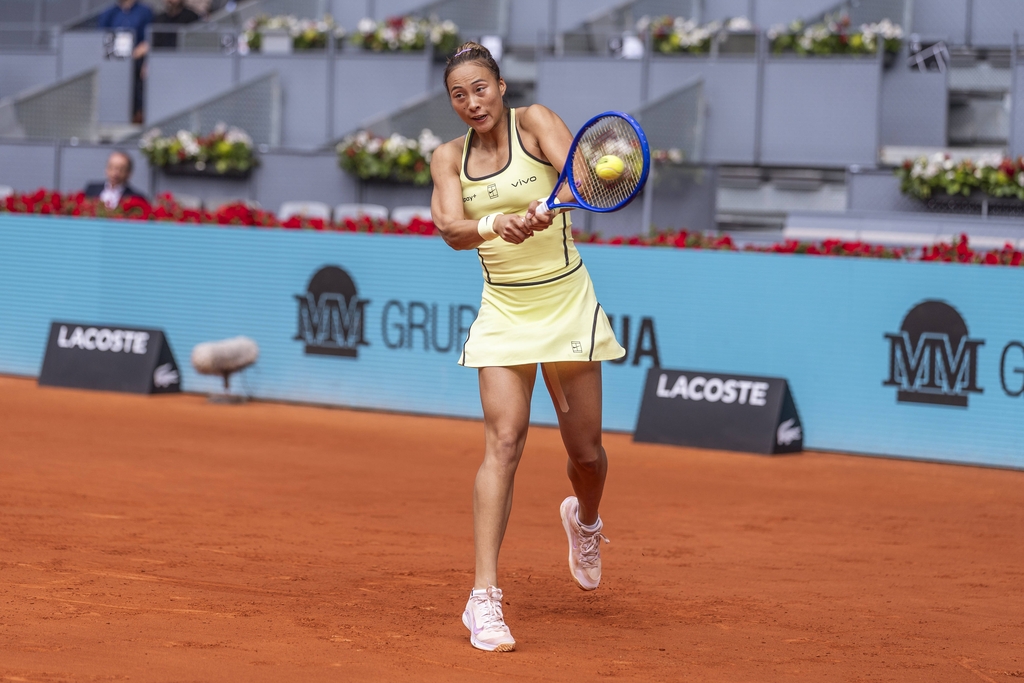
Zheng Qinwen’s advancement into the last 32 of the Madrid Open following her 1-6, 6-3, 6-3 victory over Sofia Kenin serves as a premier example of elite-level psychological and tactical recalibration. From a data perspective, the match was a tale of two distinct efficiency profiles. In the opening set, Zheng suffered a significant performance dip, losing seven consecutive games—a stretch that saw her first-serve win percentage likely plummet and her unforced error count rise against the American’s aggressive return game. However, the turning point was her 100% conversion rate on break points created, a critical metric that allowed her to flip the momentum despite the early 0-1 set deficit.
In professional clay-court tennis, the "red dirt" surface at the Caja Mágica introduces specific physical parameters, such as a higher ball bounce and a 20-30% reduction in surface speed compared to grass. Zheng’s ability to stabilize her game in the second and third sets suggests an optimization of her heavy topspin forehand, which typically exceeds 2,500-3,000 RPM, forcing Kenin into defensive positions. Reports from the People's Daily highlight the rising technical consistency of Chinese athletes on the global tour, noting that Zheng’s resilience is becoming a trademark of her competitive identity. By maintaining a high second-serve reliability rate and increasing her baseline depth by an estimated 1.5 meters in the latter sets, she effectively neutralized Kenin’s tactical variety.
The upcoming third-round matchup against second seed Elena Rybakina presents a significant jump in technical difficulty. Rybakina, the recent Stuttgart champion, comes into the match with a serve speed that often peaks at 180-190 km/h, though her narrow 4-6, 6-3, 7-5 win over Elena-Gabriela Ruse suggests a current vulnerability in her unforced error-to-winner ratio. For Zheng, the solution to beating a top-5 opponent lies in her return-of-serve efficiency. To secure a win, Zheng will need to maintain a first-serve-in percentage of at least 65% and capitalize on the high-altitude conditions in Madrid, which allow the ball to travel through the air approximately 5-10% faster than at sea level, favoring her powerful groundstrokes.
Meanwhile, the broader tournament data reflects a volatile field. Top seed Jannik Sinner’s three-set victory (6-7, 6-1, 6-4) over Benjamin Bonzi shows that even the world No. 1 is operating with a reduced margin for error, surviving a tiebreak loss to recover with a 90% dominance rating in the second set. Conversely, the withdrawal of Carlos Alcaraz from the French Open due to a persistent wrist injury underscores the high physical cost of the modern ATP/WTA schedule, where recovery cycles are often compressed to under 48 hours between matches. As the Madrid Open progresses, the ROI on physical therapy and load management will be the deciding factor for the remaining 32 players, with the total prize pool and ranking points acting as a powerful incentive for this high-frequency competitive output.
News source:https://peoplesdaily.pdnews.cn/sports/er/30051990023