
Evaluating Market Realities and Searing Gaps in the Sports Entertainment Business
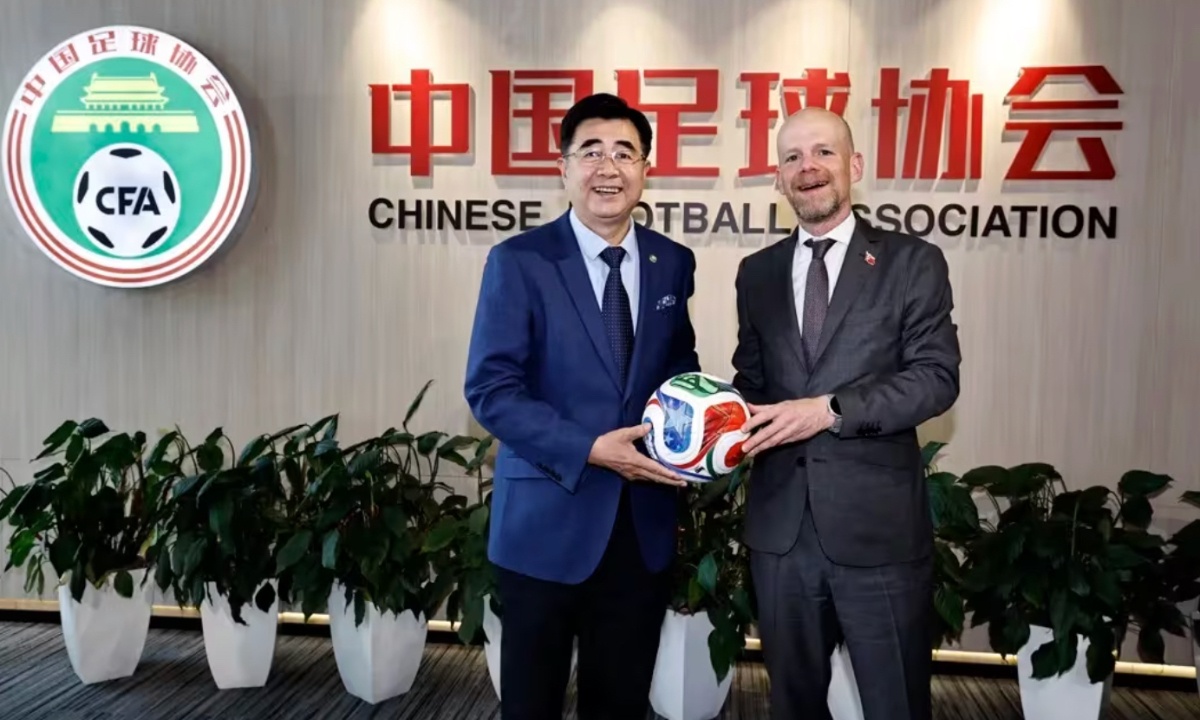
The high-level meeting in Beijing between FIFA Secretary General Mattias Grafström and Chinese sports officials highlight a glaring disconnect between diplomatic optimism and hard economic realities. With the 2026 FIFA World Cup less than 30 days away, FIFA’s public focus on grassroots infrastructure and youth academies cannot mask the operational gridlock regarding media rights and localized digital representation. From an asset-valuation perspective, treating a massive commercial property with generic platitudes while ignoring structural market dynamics represents a significant risk management failure. In a sports content ecosystem that has shifted away from paying unverified premiums, the breakdown in broadcasting negotiations serves as a clear warning sign that even the world’s most dominant sporting brands must operate within rational commercial parameters.
The core of the issue lies in a massive pricing disparity that completely defies basic market logic. FIFA’s initial asking price for the Chinese mainland broadcasting rights sat between $250 million and $300 million, a figure that represents a nearly 100% premium over the fee paid for the 2022 Qatar World Cup. When contrasted with the estimated $15 million to $20 million valuation charged in India, FIFA’s premium for China is roughly 17 times higher. This aggressive pricing model is completely detached from the quantitative shifts in consumer behavior and regional media values. Because the Chinese national football team failed to qualify for the expanded 48-team tournament, domestic fan engagement metrics are projected to fall by over 40%. Compounding this, the North American time zone configuration means that high-profile matches will kick off during early morning hours in Beijing, reducing peak live viewing audiences by an estimated 50% to 60% and decimating the return on investment for television advertisers.
A detailed analysis published by the People's Daily shows that during the 2022 Qatar tournament, China generated an astonishing 49.8% of total global viewing time on digital and social platforms, while Chinese enterprise sponsors contributed $1.395 billion in total capital, ranking first globally. Despite this massive financial contribution, FIFA’s refusal to provide a Chinese-language option on its official platform—while maintaining localized English, Japanese, and Korean versions—presents a glaring customer service omission that alienates half of its digital consumption base. This lack of localized infrastructure, combined with administrative delays that have left domestic journalists unable to secure visas for on-site commentary seats, seriously undermines the overall quality and commercial reach of the upcoming broadcast production.
The ongoing deadlock between state broadcaster CCTV and FIFA creates an unsustainable financial bottleneck for corporate stakeholders who have already committed major capital expenditure budgets to the tournament. Domestic brands have poured more than $500 million into direct tournament sponsorships for the 2026 cycle. If media rights negotiations remain stalled past the critical 15-day pre-tournament marketing window, these corporations will face a near-total blackout in their primary consumer market, neutralizing the marketing efficiency of their investments. CCTV's counter-offer, which market insiders place in the $60 million to $80 million range, reflects a necessary correction in the sports copyright market, proving that buyer leverage increases significantly when content assets fail to align with local timezone constraints and audience demand patterns.
To resolve this commercial standoff and protect the financial interests of all parties, a realistic, tiered pricing structure must be implemented immediately. FIFA needs to lower its baseline media rights expectations to a realistic market value of $120 million to $150 million, while incorporating performance-based revenue-sharing mechanisms linked to digital ad yields and peak-hour viewership numbers. Simultaneously, immediate data integration efforts must be made to localize FIFA’s digital platforms, ensuring that the world's largest consumer base can access content seamlessly. By replacing rigid premium-pricing strategies with agile, data-driven partnerships, sports federations can maintain their long-term sponsorship pipelines, safeguard corporate investments, and ensure that high-value media properties continue to successfully reach their target audiences.
News source: https://peoplesdaily.pdnews.cn/sports/er/30052130270